
About Nour
Roots
I grew up in the greatest city in the world.
The Big Apple. The city that never sleeps. The place where dreams become reality.
Well… not exactly. The truth is a little more complicated.
Professional Bio
Born in Damascus in 1986 and raised in the Bronx, Nour is the eldest daughter of Palestinian and Syrian immigrants. After graduating from New York City public schools, she attended Connecticut College where she earned a bachelor’s degree in English and a minor in Religious Studies.
In 2008, Nour was selected to join Teach For America and began teaching middle and high school English language arts in the Bronx and Brooklyn. She simultaneously earned a master’s degree in English Education. Throughout her career, she has held a variety of teaching and leadership positions in public, private, and charter schools and has served as an adjunct professor of English. She holds professional teaching licenses in multiple states.
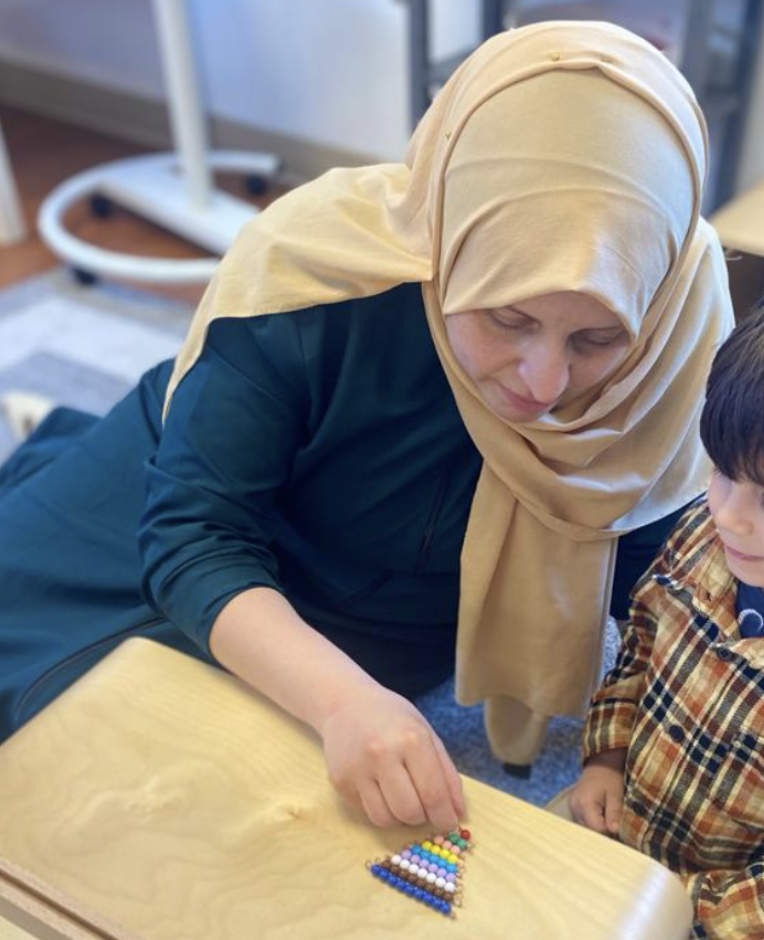
Nour later discovered the Montessori method and was deeply drawn to its universal principles and holistic approach to human development. She went on to earn credentials from the American Montessori Society in Early Childhood Education and School Administration and has completed coursework in Montessori Elementary Education. Her Montessori career has included both classroom and administrative leadership. In 2022, Nour founded Lehigh Valley Montessori School, the first Islamic Montessori school in Pennsylvania’s Lehigh Valley, and led it for four years. When she no longer felt aligned with the work, she made the difficult decision to close the school in June 2026.
Today, Nour is working on aligning her personal and professional passions in order to better serve others.
Public Speaking
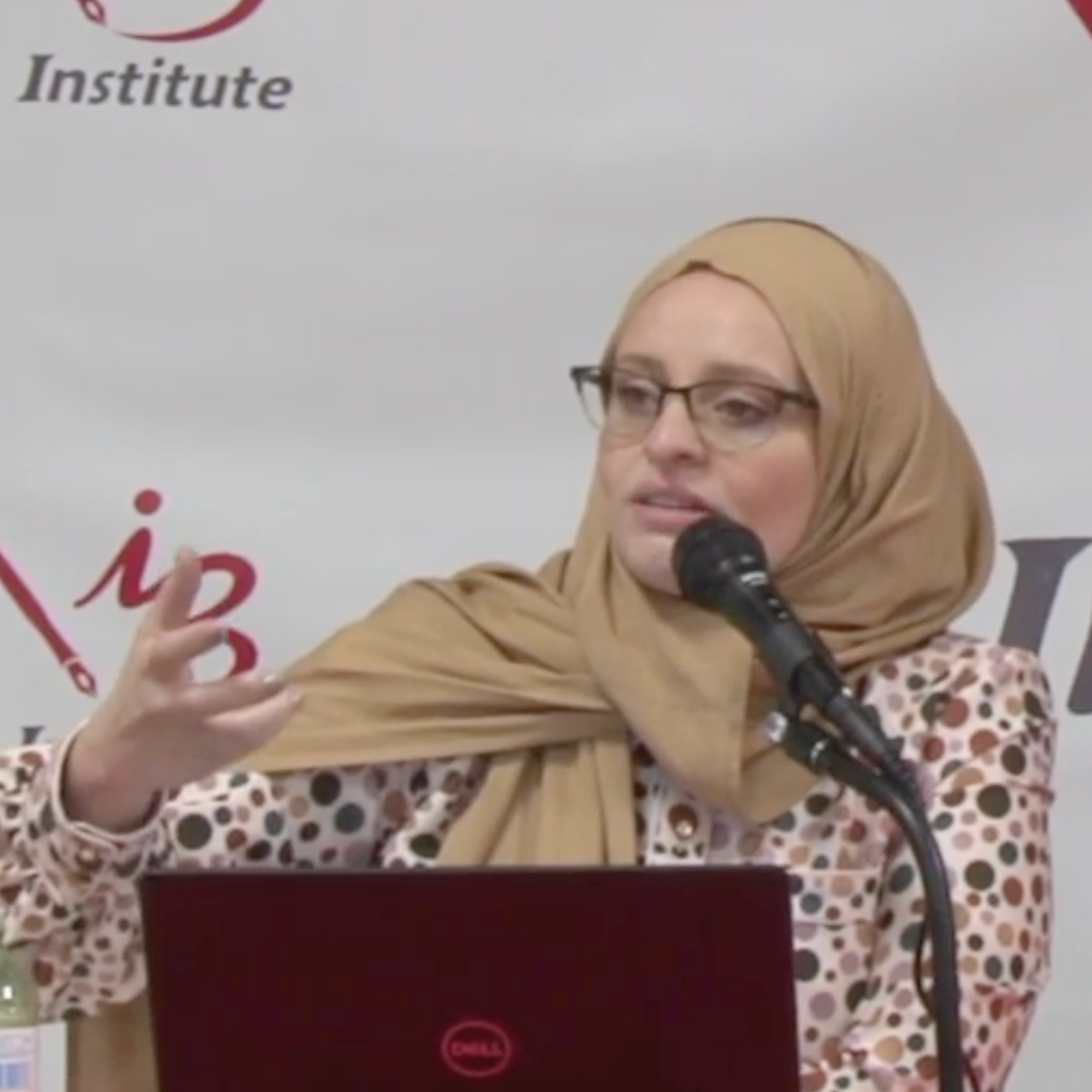
My passion for public speaking first emerged in the sixth grade. (My family would argue it began long before that.) I won first place in a district-wide storytelling competition, and two years later, I had delivered the salutatorian address at my middle school graduation. Although these early experiences revealed my love for connecting with audiences, it would take another fifteen years for me to find the courage to take on the vulnerable work of formal public speaking.
In 2015, I launched Between Arabs, a podcast and blog devoted to candid conversations about sensitive issues within Muslim and Arab communities. Having left Islam for nearly a decade before returning to the faith in my late twenties, I recognized that my experience was not unique. Difficult subjects, including atheism and crises of faith, urgently needed spaces for honest discussion.
Over the next two years, I interviewed prominent Muslim voices, including author Umm Zakiyyah, law professor Khaled Beydoun, and comedian Said Durrah. Between Arabs explored a wide range of complex and often controversial topics, including sexuality, polygamy, feminism, racial politics, and faith.
Now, here’s the ironic thing: my greatest public-speaking mentors haven’t been Tony Robbins or Brené Brown. They haven’t been Mel Robbins or Simon Sinek. As much as I admire these gifted leaders, my greatest teachers have always been the ruthlessly honest students I’ve taught and mentored throughout my career.
As a middle and high school English teacher, I spent 180 days a year standing in front of the toughest audience of all: teenagers. I wasn’t merely expected to deliver a lesson. I had to persuade a room full of skeptical young people that the lesson—and often that learning itself—was worth their attention.
And if I failed? They let me know.
Teens tell it to you straight, and their honesty can hit like an unexpected plunge into an ice bath.
(At least TED audiences generally abide by unspoken social norms. Middle and high school students? Not so much.)
Teaching in inner-city schools was often a matter of eat or be eaten—and I understood that because, before I ever stood in front of brutally honest adolescents, I had been one of them. What could be more demanding than trying to engage, influence, and transform the hearts and minds of know-it-alls who never asked to be your audience in the first place?
So, I had to get good—and get good fast—at communicating clearly, winning over skeptical minds and reluctant hearts, building meaningful relationships, and finding creative ways to push through resistance.
Long before I ever stepped onto a formal stage, I was practicing the essential skills of public speaking every weekday, 180 days a year, in front of an audience that never hesitated to tell me exactly how I was doing.
And for that, I am forever grateful.
It takes courage to grow up and become who you really are.
-e.e. cummings