Roots
I grew up in the greatest city in the world.
The Big Apple. The city that never sleeps. The place where dreams become reality.
Well… not exactly. The truth is a little more complicated.
Yes, I spent most of my childhood in New York City, but it was hardly glamorous. I grew up in the Bronx. No, not the boogie-down Bronx. The broke-down Bronx. The hold-you-down Bronx. The you-ain’t-goin’-nowhere-in-life Bronx.
Did I mention I’m also an immigrant who became an American citizen at thirteen? That beneath my rough New York upbringing, I carry Palestinian blood, Syrian roots, and a Muslim soul?
It isn’t that I’m ashamed. Well, not anymore.
There was a time when I hesitated to identify openly as Arab and Muslim. Today, those identities no longer make me uncomfortable. If I hesitate now, it is because I know they sometimes make other people uncomfortable.
Maybe you’re one of them.
My story, however, does not begin with me. It begins with my parents and with their parents before them.
My father, a proud Palestinian, was born in Egypt in 1957 and raised in Kuwait. His parents came from Jaffa, the historic Mediterranean port city known as the “Bride of the Sea.” Jaffa was a thriving center of agriculture, commerce, literature, and intellectual life. Its citrus industry was famous throughout the world, and its oranges remain the best anywhere. Objectively speaking, of course.
Now comes the difficult part.
Not difficult for me to say anymore—but perhaps difficult for some people to hear.
My grandparents were expelled from Palestine in 1948. Their home was taken from them. My grandmother made the treacherous journey from Jaffa to Gaza and then to Egypt, much of it on foot, carrying her disabled brother on her back.
There is much more to that story, but I will save it for another time. For now, it is enough to understand this: I live with complex trauma, and some of it did not begin with me. It traveled through generations. Its story began in Palestine long before mine began in New York.
Fast-forward to Damascus in 1985, when my parents met and married. I was born there the following year.
Before my first birthday, my parents immigrated to the United States and joined my father’s extended family in Harlem. (If you know, you know. And if you’ve read The Autobiography of Malcolm X, then you really know.)
This was not the polished, postcard version of Manhattan. I never owned a cotton t-shirt with the phrase “I <heart> NY” on it. My earliest memories were not of a glittering city waiting to welcome us.
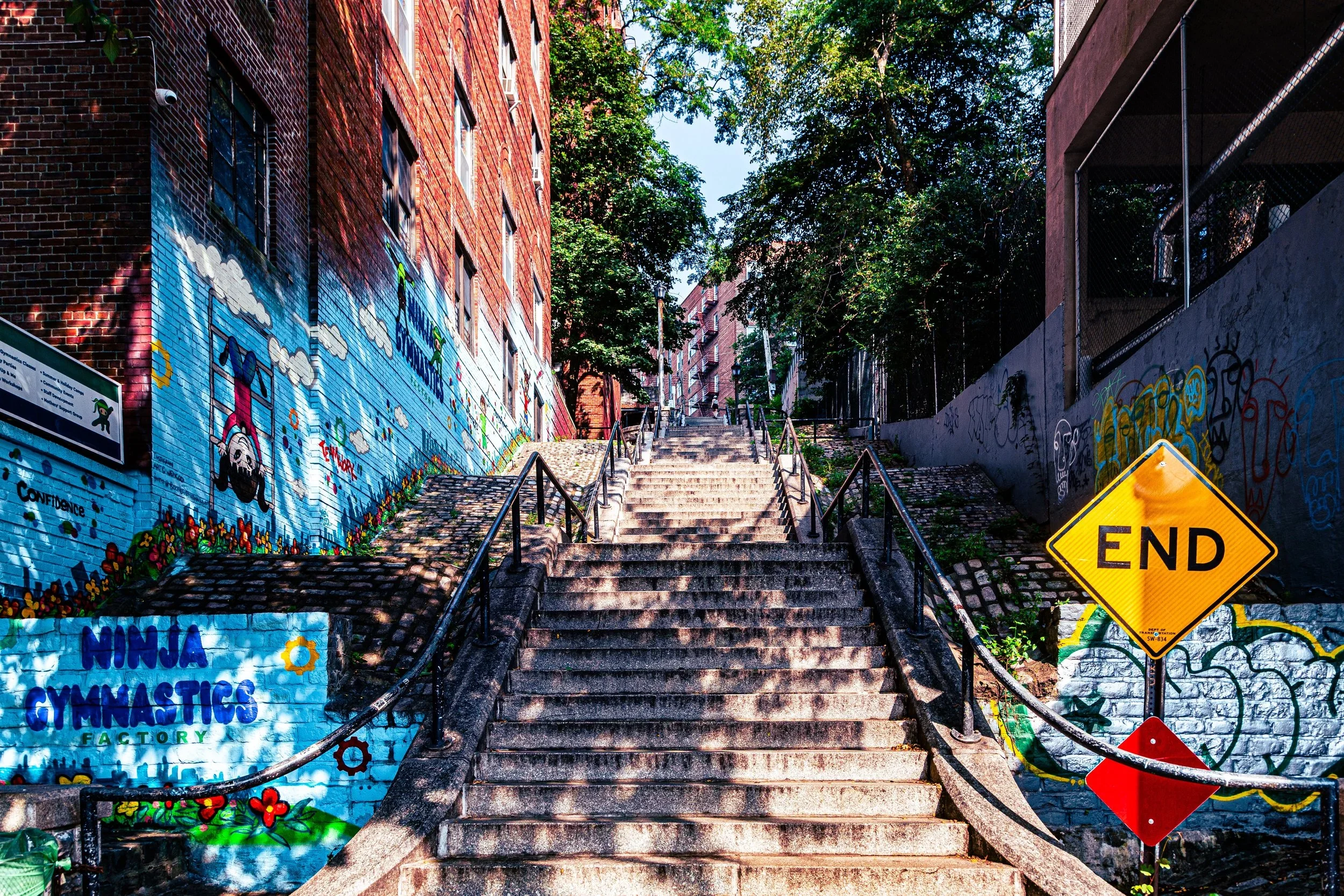
When I was four, my father moved our family uptown to the West Bronx. I would spend the next fourteen years in a poor neighborhood, attending struggling New York City public schools and learning what it meant to be judged by my background, but never quite knowing where to turn for relief.
The categories used to recognize marginalized peoples had no place for someone like me. I wasn’t Black, Asian American or Pacific Islander, Indigenous, Latino, or Hispanic. I was a white-passing Palestinian child in a predominantly Black and Latino community—visibly invisible.
No one seemed to know what to make of me. Or where to place me.
My elementary school teachers, however, never let me (or the small handful of other low-income Palestinian children) forget that we were different.
Not different in a way that made anyone curious about us. Different in the way that made us other.
Just north of my neighborhood was another world: Riverdale, an affluent, predominantly Jewish community. Riverdale and the neighborhood where I lived were not divided by railroad tracks or an official boundary. They were separated by Manhattan College, Broadway, a notorious hill—and the invisible architecture of class.
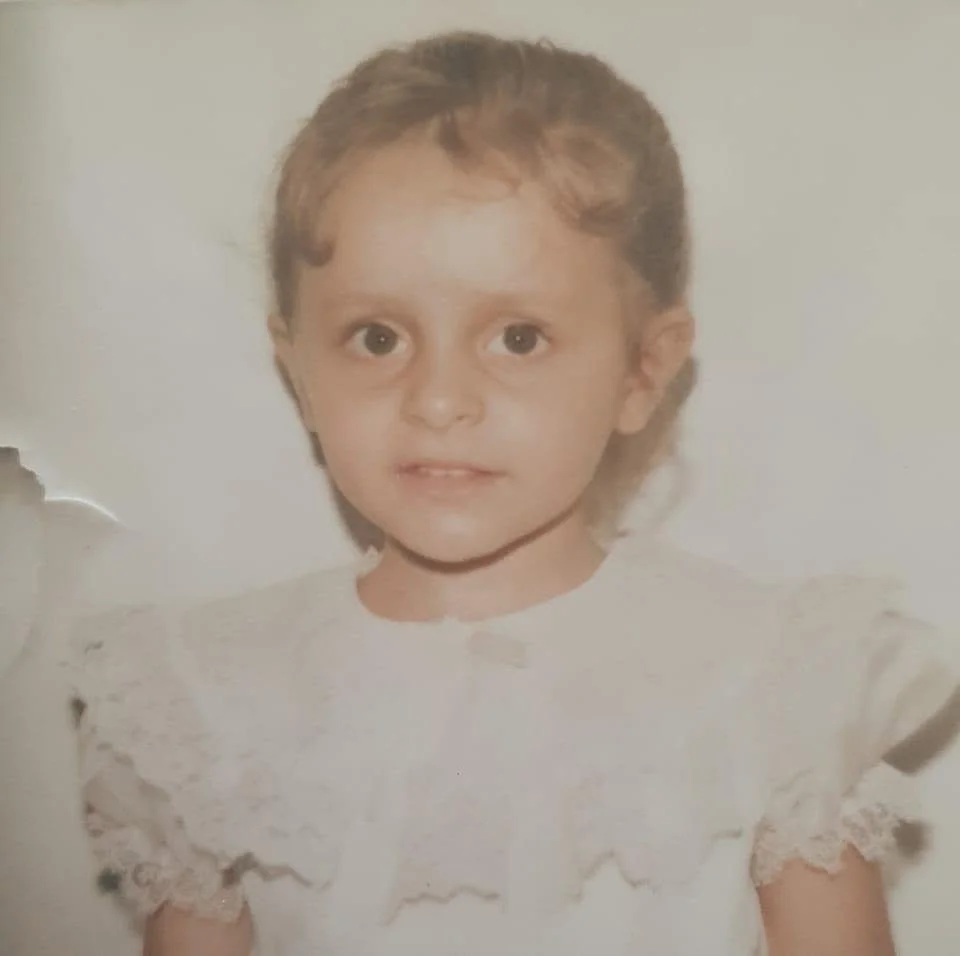
I grew up in the margins, never fully belonging here or there.
Meanwhile, home offered little refuge. My father was fighting his own battles with complex trauma, mental illness, and addiction. His suffering became ours, but it fell especially heavily on my mother—an immigrant raising three daughters without family nearby to support her through two decades of physical and psychological turmoil.
Like many people living with complex trauma, I spent much of my life adapting without realizing that was what I was doing. I learned to read rooms, anticipate danger, achieve, perform, and survive. I wore so many masks that, for a long time, I could not distinguish them from my own face.
From the outside, mine looked like a success story. I escaped poverty. I built a career. I married and became a mother.
But surviving adversity is not the same as healing from it. Neither is becoming successful enough to make the pain look as though it never happened.
Healing—real healing—is the work of coming into alignment with who you are beneath all the adaptations that once kept you safe.
And so, here I am. Learning to face the truth without collapsing into fear, shame, or panic. I am claiming my journey, my life, and my story—including the parts that cannot be made comfortable for public consumption. I am also sharing the lessons I continue to learn in the hope that something in my story might help you see your own more clearly.
And if you would prefer the shorter, tidier, more palatable version of who I am, you can read my official biography.